Three days of waiting
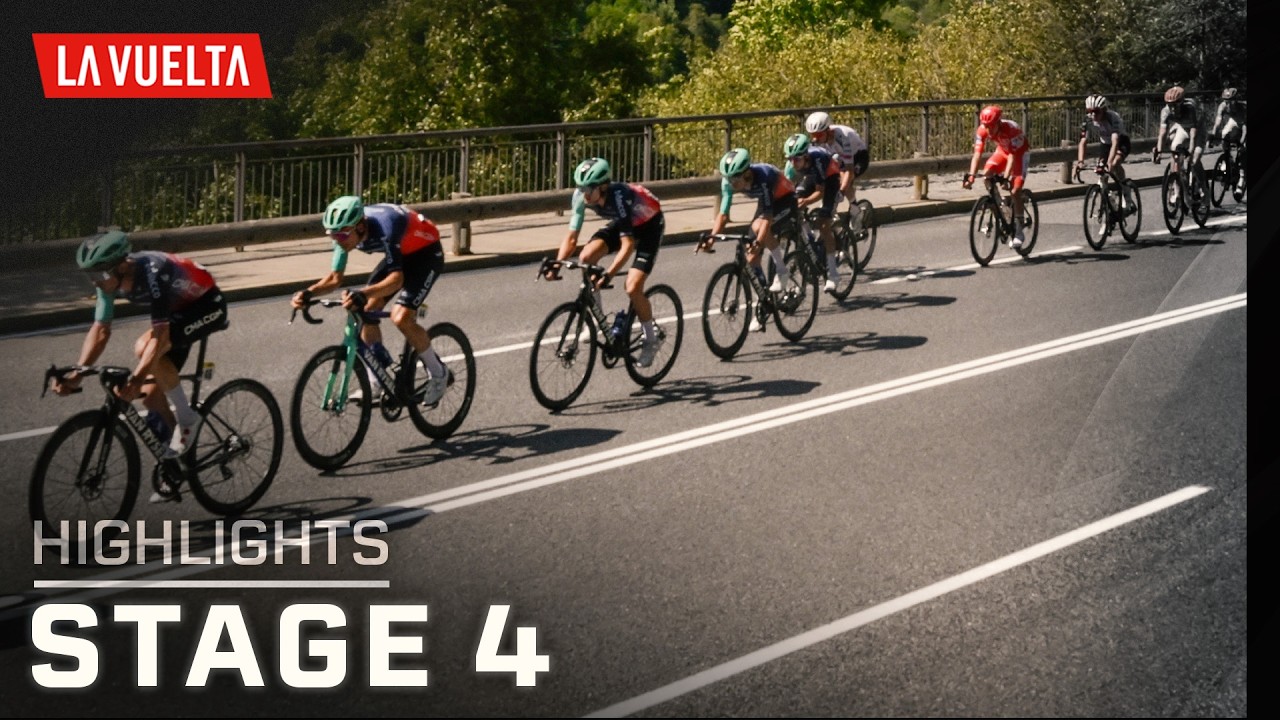
The Pyrenees owed the Vuelta a mountain stage after cancelling the last one, and stage 4 paid the debt with interest: a 105 km loop around Andorra la Vella that started straight up the Port d’Envalira — 25 km to 2,408 metres from kilometre zero — then stacked the Collada de Beixalis, the Coll d’Ordino and the Alto de la Comella on top before a four-kilometre plunge back to the capital. Short, savage, and with no flat road anywhere for a team to control. A big, dangerous break went on the Envalira; UAE let Decathlon chase it, and Sander De Pestel did an hour of the kind of work that wins nothing and decides everything. By the foot of Beixalis the escape was gone and the race was one big group with a red jersey sitting in it, looking at his watch.
Beixalis, 50 km to go
The Collada de Beixalis is 6.7 km at 8.5% with ramps to 16%, and it is where Pogačar went — with 50 kilometres and two more mountains still to ride. Jay Vine had lifted the pace; Decathlon lifted it again; and then the world champion simply left. Felix Gall, the only man who tried to follow, lasted a few hundred metres and drifted back into a chase group that would spend the rest of the afternoon confirming the obvious: Carapaz, Onley, Roglič, Kuss and Mas, all present, all riding, all going backwards. 1:40 at the top of Beixalis. Nearly three minutes over the Coll d’Ordino. By the Comella there was nothing left to decide except the size of the number.
The number
2:39. Pogačar stopped the clock at 2:40:35 in Andorra la Vella, and the next man across the line was Jarno Widar, the 20-year-old Belgian riding his first Grand Tour for Lidl–Trek, who had the courage to attack out of the chase group and the legs to hold it. Gall took third from the same group, with Onley, Kuss, Mas and Roglič all on the same time. It was, by distance, the longest solo victory of Pogačar’s Grand Tour career — longer than the Tour raids, longer than anything at the Giro — and he rode the last ten kilometres of it waving to the crowd on the descent. The GC after four days: Pogačar; Roglič at 3:21; Mas at 3:32; Kuss at 3:44; Onley at 3:45; Carapaz at 3:50; Gall at 3:57. Every one of his rivals within 36 seconds of each other, and all of them the far side of three minutes from the man in red.
What the rest of the race does now
The honest answer is: race for second, and hope. Roglič, patched up from his training crash, was the best of the rest without ever looking like a threat. Mas, the perennial Vuelta runner-up, was his usual immovable self in a group going nowhere. Widar’s ride was the real revelation — a kid attacking the chase group when it was full of Grand Tour winners and making it stick. But the tactical lesson of Andorra is one the peloton has learned before and keeps having to relearn: if you let Pogačar reach the hardest climb of the day with fresh legs and a gap to play for, he will take the whole race in an afternoon. Nobody attacked before Beixalis. Nobody attacked on it except him.
In the grupetto
A 105 km stage with 3,400 metres of climbing is a nightmare for the autobus, because there’s no flat to hide in and the time cut is computed on a winner going faster than anyone thought possible. The sprinters and rouleurs who rode the Envalira from the gun and then survived three more climbs deserve the applause — as does Sander De Pestel, who dragged the peloton up a first-category col for a team-mate who was going to lose 2:39 anyway. That’s the sport.
Moral of the story
Three days ago Pogačar stopped a bike race on a mountain because the mountain was too dangerous. Today he started one on a mountain because nobody else would. The grupetto’s moral: a rider who attacks from 50 km out isn’t gambling; he’s telling you what he already knows about your legs. The Vuelta has 17 stages left and a three-minute problem. It is, as they say, a long way to Granada — but not, on this evidence, for everyone.